
Dade County Parole Versus Probation
A Dade County jail release can lead to probation, parole, another form of custody, or no supervision at all. The label depends on the sentence and the agency. Parole is conditional release from a Georgia state-prison sentence under the Georgia State Board of Pardons and Paroles. Probation is a sentence imposed by a court. It can follow time in jail, begin in place of confinement, or continue after part of a split sentence is served.
That distinction controls the search path. A Dade County case that resulted in a GDC prison term may later appear in the Board's parolee search. A person released from Dade County Jail on a probation order should instead be checked through the case disposition and probation documents. The live jail roster, even if one were available, would only show custody at that moment. It would not establish the full terms of supervision after release.
| Record type | Parole | Probation |
|---|---|---|
| Who orders it | Georgia State Board of Pardons and Paroles | The sentencing court |
| What precedes it | An eligible state-prison sentence | A court sentence, with or without confinement |
| Best public check | Board parolee search | Dade court disposition or probation order |
| End record | Parole discharge or sentence expiration | Court or supervision discharge |
Verify Dade County Release Supervision
Start with the custody event, not a guess about status. Dade County Jail handles local detention. GDC handles state prisoners. The Parole Board handles parole decisions and its public parolee search. A direct county release on bond, dismissal, time served, or probation does not create a state parole record merely because the person spent time in jail.
- Confirm whether the person left Dade County Jail for the community, GDC, or another authority.
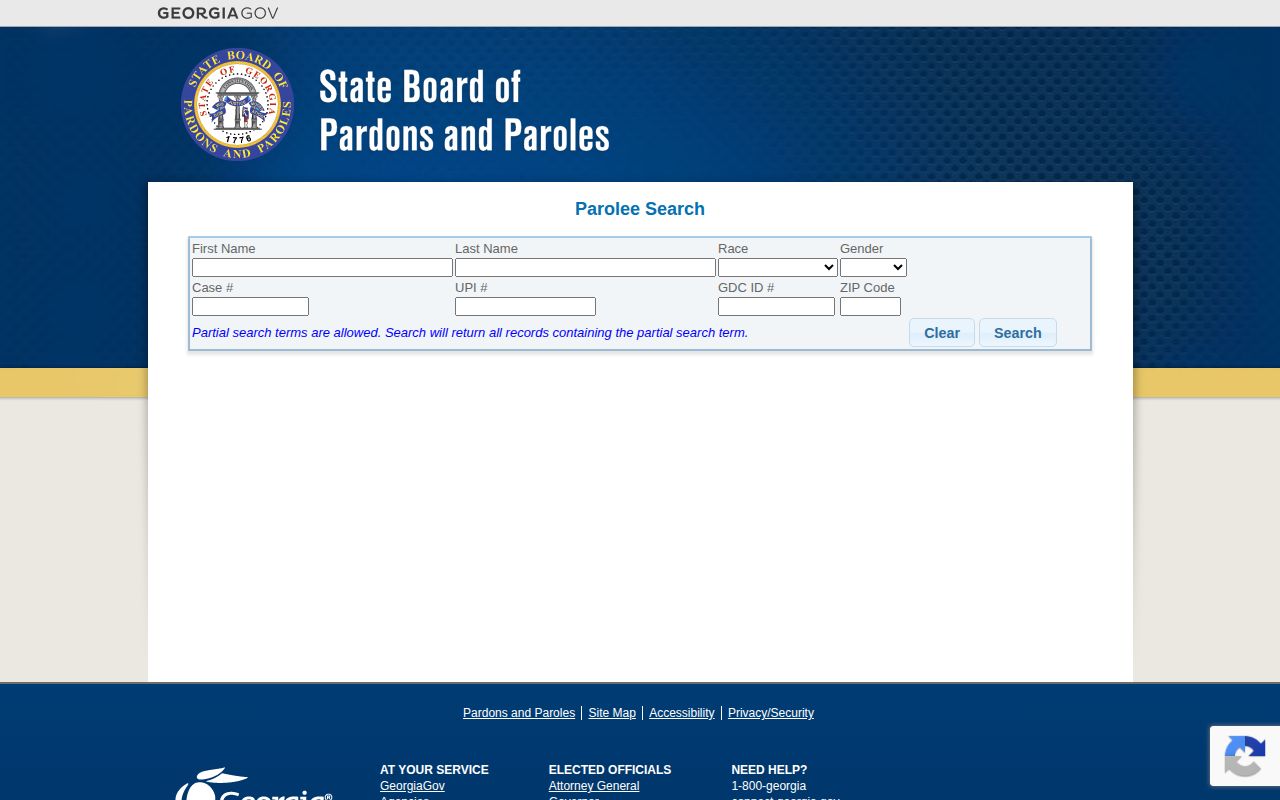
- For a past GDC sentence, search the official Georgia parolee search and compare identifiers.
- For someone still in state prison, use the Inmate TPM Lookup. A Tentative Parole Month is not proof of release.
- For probation, request the specific sentence, disposition, or probation order from the Dade County court record.
- Check local warrants or holds through the sheriff and court-services record path, since no Dade public absconder list was found.
- Verify the result with the office that created the record when names, dates, or statuses conflict.
The Board says eligible prisoners are considered automatically, so no parole application is required. It may establish a TPM, deny parole, or revisit a decision before release. After release, the parolee search is the stronger public tool for parole status. For the underlying Dade release event and court record, the Dade County released-inmate search guide explains the local records route.
Identifiers matter in each search. Compare the full name, GDC number, case number, age, and conviction county when those fields appear. Similar names can point to different people. An old parole record may also describe a sentence that has since ended, while a new Dade booking may arise from a separate case. If the public result lacks a clear discharge or current-office field, request confirmation from the Board or the court rather than filling the gap with an assumption.
Dade County Supervision Record Routes
The research did not identify a public Dade County parole or probation office directory entry with verified local hours. The safe route is to split the request by record owner. The State Board answers parole status through its statewide tools. The sentencing court controls the probation order and disposition. The Dade County Sheriff's Office can address a local jail release, warrant, or hold record, but it does not replace the parole agency or the sentencing court.
Georgia State Board of Pardons and Paroles
Public parole status: Parolee Search
Pending parole review: Inmate TPM Lookup guidance
Process and eligibility: Parole Process in Georgia
A court order is more precise than a broad name search. Ask for the specific case disposition, sentence, probation order, revocation order, or discharge entry. That wording helps separate an active probation term from an old booking, a dismissed charge, or a state parole record tied to another sentence.
Dade Release Conditions and Violations
Conditions are rules attached to supervision. They can include reporting, approved residence plans, program participation, and compliance with court or Board directions. The exact terms come from the parole certificate or probation order, not from a booking summary. A violation allegation may lead to a warrant, revocation process, or a new jail booking. It does not by itself prove that parole or probation was revoked.
An absconder is a supervised person alleged to have stopped reporting or left supervision without permission. No public Dade County absconder or warrant list surfaced in the source sweep. The sheriff's Divisions page says Court Services serves warrants and civil papers, handles transports, and supports the courts. It also identifies a jail Terminal Agency Coordinator who works with GBI on warrants. Those facts support direct verification, not a claim that an online list exists.
How Dade County Supervision Ends
Release from custody and discharge from supervision are separate events. A person may leave prison on parole while the Georgia sentence continues. Probation may remain in force after a Dade County jail term ends. Supervision ends only through the action allowed by the controlling sentence, such as expiration, a discharge, or a court order. A blank search result should not be treated as a discharge record.
For parole, compare the parolee search with the GDC offender record and seek Board confirmation if the dates conflict. For probation, obtain the court's final order or a supervision discharge record. Georgia's Open Records Act generally requires an agency response within three business days, but it applies to existing records and does not require an office to create a new status summary. Frame the request around a named document and case.
Useful request details include the person's full name, date of birth if known, case number, sentence date, and the exact record sought. Ask for a parole discharge, probation discharge, final disposition, or revocation order by name. That narrow request reduces the risk of receiving a booking sheet that confirms past custody but says nothing about present supervision.
Dade Parole Decisions and TPMs
Georgia does not present ordinary parole review as a Dade County public hearing calendar. For eligible people in GDC custody, the Board reviews the case through its statewide process. A non-life case may receive a Tentative Parole Month or a denial. The TPM marks the month for final review. It is not a promise that the person will walk out that month.
Misconduct, an unmet program condition, or a residence plan that cannot be verified may postpone or cancel the tentative timing. The Board can also withdraw a grant before the effective date. A parole to detainer is different again. It sends the person to a requesting authority instead of directly into the community. In life-sentence cases, the Board describes outcomes as grant or deny rather than using a TPM. These outcome labels should be read beside the GDC status, not as substitutes for an actual release record.
The official Georgia parole process page shows how state review works.
This image identifies the Board source for parole review. It is not a Dade County jail release record or an individual parole decision.
Dade Supervision Warrants and Holds
A Dade County jail exit can be a transfer. The person may leave county custody because GDC, another county, a federal authority, or another agency takes custody. The Parole Board also says a detainer can come from local, state, federal, or military authorities. A detainer does not bar parole review, and the Board may grant a conditional transfer to that authority.
Ask a focused question: was the person released to the community or released to another agency? Then request the receiving agency, date, and stated release type. For a warrant tied to probation, use the Dade court case and sheriff route. For a state parole warrant, use the Board record. Georgia VINE can send custody-change alerts when an agency participates, but it is a notification system, not a public parole or warrant registry.
Dade County Reentry Support
Dade County publishes a local Celebrate Recovery and Hand Up page. It describes Celebrate Recovery, A Hand Up Ministry, Hope House, Hope Connection, and a HopeLine at 1-888-912-6487. These are support and recovery resources. They do not supervise parole, issue probation terms, clear warrants, or confirm release records.
The distinction matters. A person seeking help after release may use local support while still reporting to a state or court-directed officer. Program staff cannot replace that reporting duty unless the supervising authority says so. To verify legal status, return to the Board, the sentencing court, or the sheriff record that controls the question.